
Why Climate-Smart Technologies Remain Underutilized in Pakistan’s Agriculture
This blog is based on CDPR’s policy note “From Vulnerability to Vitality: Building Climate Resilience in Agriculture.”
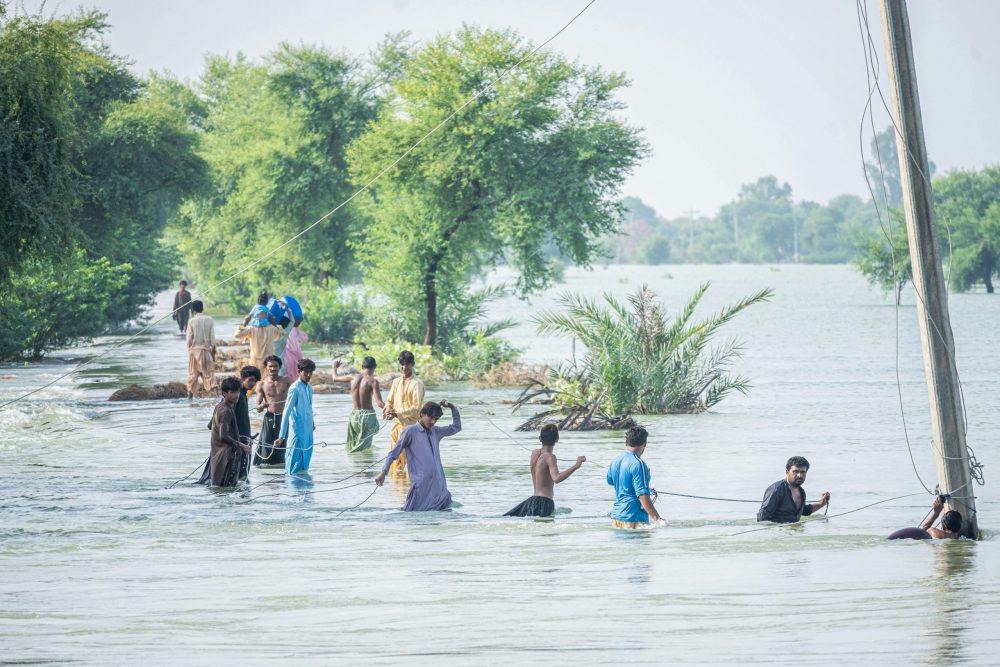
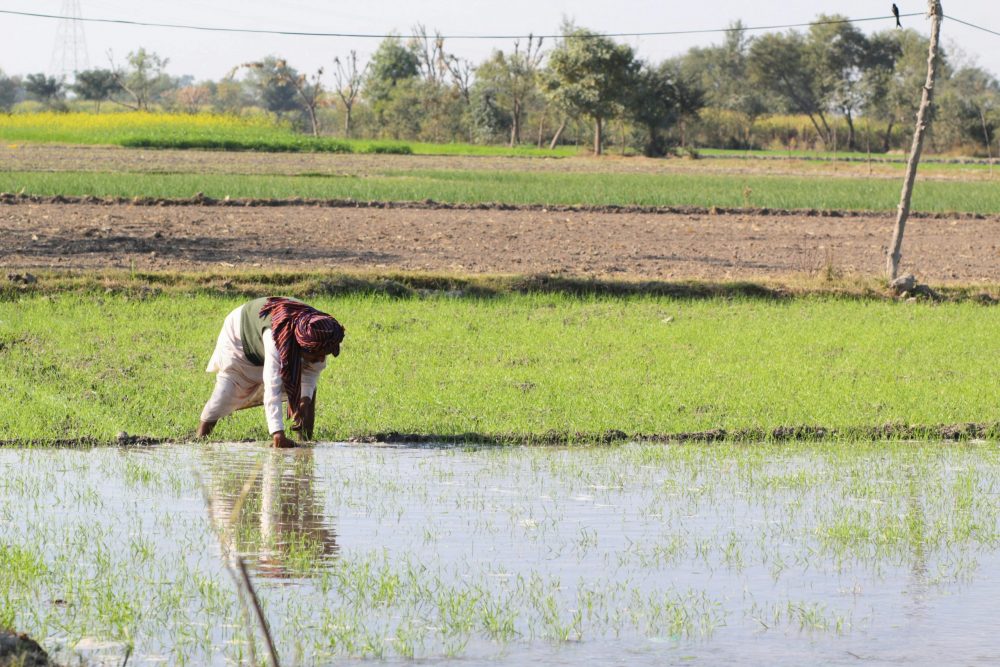
Agriculture in Pakistan is under stress because of climate change; however, the low productivity of the agricultural economy cannot only be attributed to environmental factors. Other than factors like rising temperatures, extreme rainfall, and frequent climate shocks, there are structural inefficiencies that impact yields, increase production costs, and compromise the resilience of farmers. One of the most important factors that limits yield in the sector is the slow adoption of climate-smart technologies and modern mechanisation, especially amongst small landholders.
Climate-smart agriculture (CSA) as a framework has become prominent because it enables the agricultural economy to increase productivity, improve resilience, and encourage optimal use of resources. Technological advancements like improved seed varieties, precision agricultural tools, and modern farm equipment offer an opportunity to mitigate climate-related risk without compromising outputs. However, adoption of these measures is uneven and low in Pakistan. This slow and low adoption causes severe consequences for the agriculture sector, including low overall productivity and increased cultivation costs across farms.
Improved Seeds and Unrealized Yield Potential
Seeds act as a foundational determinant of crop productivity and climate resilience. Climate-resilient seed varieties that have properties like drought tolerance, heat resistance, and early-maturing cultivars have been shown to have strong yield-enhancing effects across various agro-ecological contexts. Thus, their adoption is critical to navigating climate-related challenges where extreme temperatures and water crises directly affect crop development and cycles.
The report notes that wheat yields, currently averaging approximately 32 maunds per acre, could increase to nearly 55 maunds per acre through the adoption of improved seed varieties. Since roughly 22 million acres are cultivated under wheat, the aggregate productivity implications of this are substantial.
However, issues like fragmented regulatory oversight, limited quality assurance capacity, and procedural inefficiencies reduce farmers’ confidence in the reliability of inputs and act as barriers to adoption of improved seeds. The institutions responsible for certification and quality control do exist; however, their limited capacity and gaps in implementation create uncertainty, discouraging private investment and farmer uptake (World Bank, 2017; World Bank, 2023). Thus, the non-adoption of these improved seeds indicates a rational response to perceived risk rather than a lack of information or awareness.
Precision Agriculture and Input Cost Inefficiencies
Production in climate-smart agriculture depends on the precision technologies that farmers use, enabling site-specific input management. Tools like GPS-guided tractors, variable rate applicators, drones, and satellite imagery allow farmers to optimize the use of fertilizers, pesticides, and irrigation water. These technologies help reduce waste, decrease input costs, and mitigate environmental externalities (USDA, 2025).
Now that climate patterns have become more uncertain and unpredictable, these precision technologies are even more valuable. Uncertain rainfall trends, soil moisture variability, and extreme temperature conditions require resource allocation strategies to be adaptive rather than generalised, since a one-size-fits-all approach is ineffective. However, adoption of these precision agricultural tools remains limited in Pakistan because it requires high capital costs, involves technological complexity, and is constrained by limited extension systems. Thus, access to these technologies is restricted, particularly for small-scale farmers.
As a result, most production systems continue to rely on uniform rather than precision-guided input strategies, which contributes to over-application of fertilizers, inefficient use of pesticides, and misallocated irrigation. All these factors increase production costs without proportionately increasing yield. These issues are reflected in distorted cost structures that decrease farm profitability.
Mechanisation Gaps and Operational Inefficiencies
Mechanisation is critical in improving labour productivity, decreasing time delays between crop cycles, and facilitating climate-adaptive practices. Yet, Pakistan’s overall farm mechanisation rate is suggested to be only 35% (FAO, 2024). Low mechanisation on farms is directly linked to high cultivation costs and operational delays. Manual or semi-mechanised production systems experience inefficiencies in land preparation, planting, harvesting, and post-harvest handling. These inefficiencies are particularly costly in the context of climate vulnerabilities, where timing and precision are critical for mitigating yield losses.
As a result of ownership barriers, informal rental markets for machinery have emerged, enabling smallholders to access modern equipment without incurring capital investment. Evidence shows that these rental arrangements are dynamic in Punjab, where major stages of wheat cultivation show high mechanisation intensity (FAO, 2024). However, rental markets alone cannot address broader constraints associated with information asymmetries, financing limitations, and institutional coordination gaps.
Climate Variability and Technology Adoption Dynamics
Overall, failure to adopt improved seed varieties, precision input tools/techniques, and mechanisation increases vulnerability to yield instability. Research shows that climate uncertainty suppresses investment incentives, especially among smallholder farmers, due to liquidity constraints and lack of credible risk-sharing mechanisms (Kala et al., 2023).
Thus, underutilization of climate-smart practices and climate vulnerability interact in a mutually reinforcing manner. Slow adoption limits productivity growth, while increased climate risks further discourage investment in unfamiliar technologies.
Policy and Institutional Recommendations to Accelerate Technology Adoption
It is important to recognise that the adoption barriers to these climate-smart technologies are structural; hence, recommendations should focus on creating enabling environments for farmers to adopt these technologies.
- Strengthen Agricultural Research and Seed Innovation Systems
Sustained investment in agricultural research and development is essential for generating climate-resilient technologies tailored to Pakistan’s agro-ecological conditions. Strengthening provincial research institutions and promoting collaborations with international research centers can accelerate the development of high-yielding, drought-tolerant, and heat-resistant seed varieties. Constant innovation is particularly critical under climate variability, where production risks evolve rapidly (World Bank, 2023). - Modernize Regulatory and Certification Frameworks
Weak regulatory capacity and procedural inefficiencies undermine farmer confidence and slow diffusion of improved inputs. Streamlining seed certification processes, enhancing quality control mechanisms, and aligning regulatory standards with international best practices can reduce uncertainty for both innovators and adopters. Reliable input governance systems are foundational for technological transitions (World Bank, 2017). - Expand Extension Services and Technology Information Channels
Technology adoption is inherently knowledge-intensive. Strengthening agricultural advisory systems—supported by digital dissemination platforms—can improve farmer awareness of improved seed varieties, precision agriculture tools, and mechanization options. Evidence suggests that credible information and advisory support significantly influence adoption behaviour, particularly under climate uncertainty (Kala, 2017). - Promote Rental-Based Access to Mechanisation and Modern Equipment
High capital costs represent a major barrier to mechanisation adoption among smallholders. Supporting commercially viable machinery rental markets can reduce upfront investment requirements while broadening access to productivity-enhancing equipment. Rental ecosystems allow farmers to benefit from modern technologies without incurring ownership risks (FAO, 2024). - Develop a Coherent National Strategy for Mechanisation and Digital Agriculture
Fragmented policy initiatives limit scalability and coordination. A unified national framework addressing agricultural mechanisation, digital infrastructure, technology financing, and data governance can harmonize public and private sector roles. Policy coherence is essential for transforming isolated adoption successes into system-wide productivity gains.
Concluding Remarks
The slow uptake of climate-smart technologies and mechanisation in Pakistan reflects systemic barriers rather than technological scarcity. The resulting costs in productivity, including inefficient input use, increased production costs, and persistently low yields, reinforce the urgency of institutional and policy reforms. Climate resilience and productivity depend on creating an ecosystem that transforms the availability and success of technologies into widespread adoption, enabling the sector to fully reap their benefits.
References
Food and Agriculture Organization (FAO). (2024). Agricultural Mechanization for Smallholder Farmers in Pakistan.
Kala, N. (2017). Learning, Adaptation, and Climate Uncertainty.
Kala, N., Balboni, C., & Bhogale, S. (2023). Climate Adaptation Evidence.
USDA. (2025). Benefits and Evolution of Precision Agriculture.
World Bank. (2017). Climate-Smart Agriculture in Pakistan.
World Bank. (2022). Country Climate and Development Report: Pakistan.
World Bank. (2023). Unleashing the Agri-Food Sector Policy Note.