

In this episode of Let’s Talk Development, Asad Rahim (Barrister) sits down with Justice Ayesha Malik, the first woman appointed to the Supreme Court of Pakistan and a jurist whose work has significantly advanced constitutional and administrative law in the country to explore the deep connection between law, governance and development. From advancing constitutional rights through a citizen-centric lens to addressing gender vulnerability, Justice Malik reflects on how judicial thinking shapes the everyday realities of citizens. She emphasizes the centrality of the rule of law to effective governance, highlighting how weak enforcement erodes institutional credibility, deters investment and deepens inequality.
Drawing on her judicial experience, she highlights the gap between legal frameworks and their implementation. She argues that sustainable reform depends not only on sound laws, but also on consistent and impartial enforcement.

Asad Rahim Khan is a partner at Ashtar Ali & Rahim LLP and an Advocate of the Supreme Court, where he heads the firm’s dispute resolution practice across constitutional law, commercial litigation, and international arbitration. He previously served in the Office of the Attorney-General, contributing to the drafting of the Twenty-Fifth Amendment. He also teaches constitutional law at LUMS. He studied law at the London School of Economics and was called to the bar at Lincoln’s Inn.
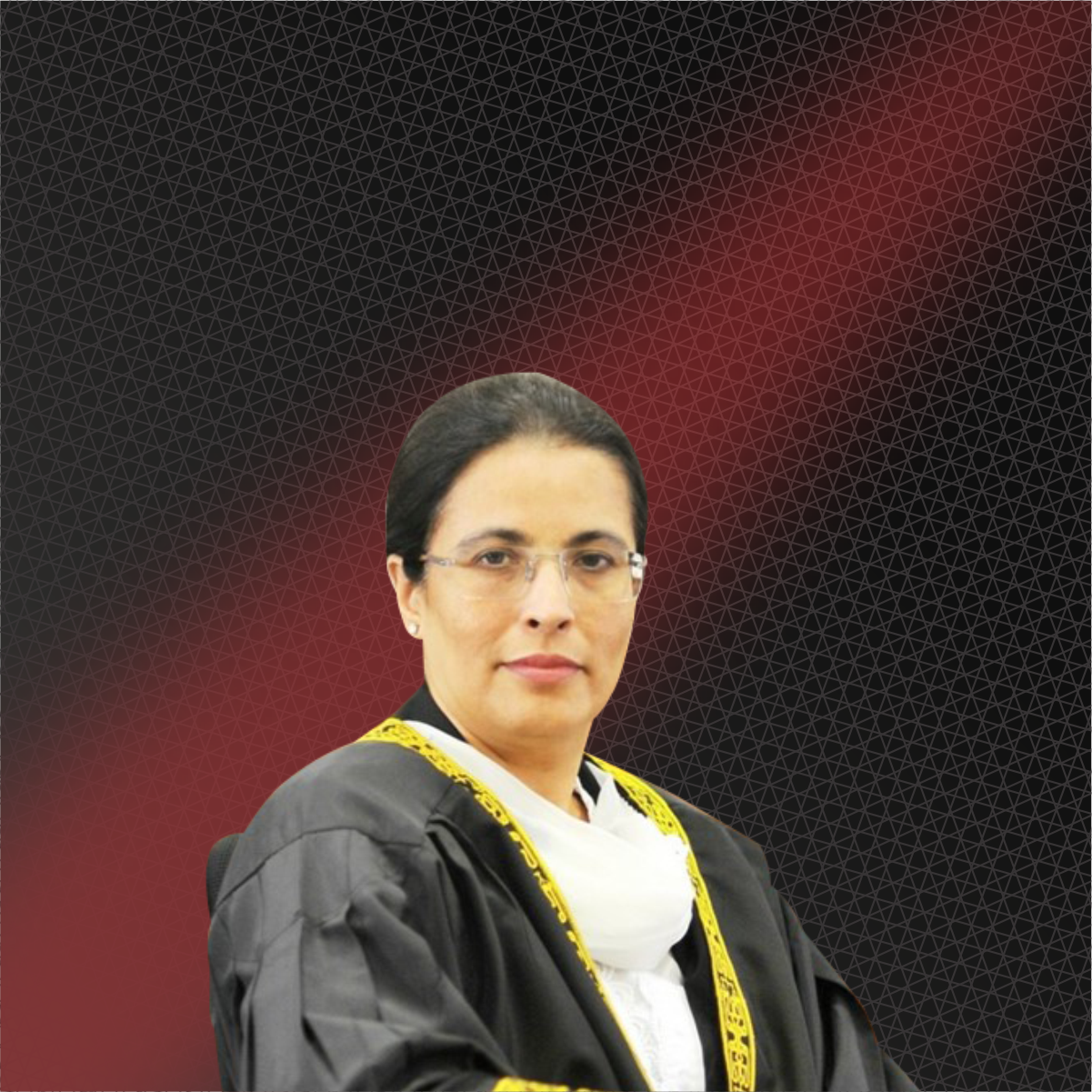
Justice Ayesha A. Malik is a Justice of the Supreme Court of Pakistan and the first woman ever appointed to that office in the country’s history. Before her elevation in 2022, she served as a judge of the Lahore High Court from March 2012. She holds an LLB from Pakistan College of Law and an LLM from Harvard Law School, where she was named a Landon H. Gammon Fellow for Academic Excellence, and began her legal career at the chambers of Fakhruddin G. Ibrahim. Her jurisprudence spans constitutional rights, administrative law, and gender vulnerability, consistently centred on the citizen. She has been named to the Forbes 50 Over 50, the BBC 100 Women list, and holds an honorary doctorate of laws from the University of London, as well as honorary bencher status at Middle Temple.