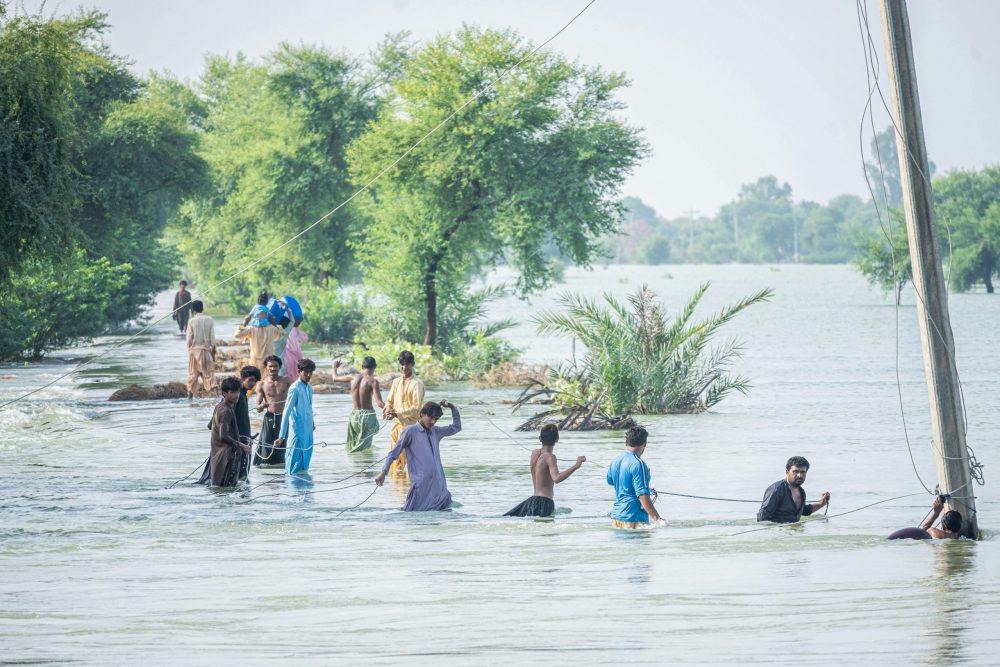

One morning in August, Lahore was yet again brought to a standstill due to torrential rainfall. The consequent flooding of roads made commuting within the city very difficult, leaving myself along with countless others unable to reach their workplaces. The economic costs of such a standstill weigh heavy on the Nation. This incident is nth in a series of such episodes, particularly in the monsoon season and highlights the failures of our water management system which is deeply concerning for a city like Lahore.
Pakistan is highly vulnerable to flooding episodes such as the ones that took place in 2022 which affected 33 million people and caused economic losses worth approximately USD 15.2 billion. According to the World Bank’s initial report on the floods, flash and urban flooding damaged about 40% of railway tracks and over 8,330 km of roads in Pakistan, with poor urban planning and water resource management being partly responsible.
Similarly, in 2020, all of the privately owned and government-run ambulance services had to be suspended due to rainwater flooding in Karachi. In addition to bringing general life to a standstill, this had major repercussions for access to healthcare facilities in times of major medical emergencies, which left unattended could have led to fatal consequences. Moreover, it occurred at a time when the city’s healthcare facilities had already been pushed to the brink amidst the pandemic further exacerbating the crisis. The National Disaster Management Authority (NDMA) called for a more resilient infrastructure to prepare for the monsoon season in 2024, highlighting the need for a more well-planned drainage system.
There are two aspects of achieving successful urban development; the first is to have a well rounded development strategy and second is ensuring sufficient resources are available for the necessary interventions to allow for successful execution of the strategy. While Pakistan has allocated PKR 1.4 trillion (roughly USD 5 billion) for infrastructure development in the fiscal year 2024-2025, a 47 percent increase from last year, there is still a significant gap in terms of urban city planning. When decisions are made concerning the allocation of funds for infrastructure and urban city planning, a critical aspect that often gets overlooked, is the issue of water management. Effective water management is essential for building resilient and sustainable urban cities especially in Pakistan where urban sprawl is already a significant challenge.
Pluvial flooding occurs when heavy rainfall overwhelms drainage systems leading to surface water flooding. In the United Kingdom, pluvial flooding is considered a bigger risk than flooding from rivers and coasts combined as it can happen anywhere and not just coastal regions. Similarly as urban population increases at a rapid pace in Pakistan, pluvial flooding possesses a significant threat. In terms of health risks, the danger of electrocution is notably higher in densely populated urban areas, as floods can compromise the electrical systems. Furthermore, this risk is exacerbated in urban areas where there are more power lines throughout the city.
The financial burden on governments and citizens increases drastically after rainwater flooding. Crucial funds which are often reserved for other projects are redirected towards this. A single public holiday is estimated to cost around 1% of the country’s GDP. (link 7). Commuting difficulties that arise as a result of urban flooding affects not only private but public transport as well. Not only is public transport a convenience for the layman but it also generates revenue for the government projected at around USD 1.49 billion in the year 2024. (link 8). Therefore, such unpredictable disruptions to public transport due to rainwater flooding each year could lead to hidden economic losses (in terms of loss of revenue from public transport usage), in addition to the obvious economic losses that result from economic activity being halted as a result of such floods. This adds to the existing economic burden Pakistan is currently facing.
Another major factor which contributes to water clogging is encroachments; they block or narrow down the access of water to the drainage system. This reduction in capacity of waterways cannot accommodate the excess water during flooding and hence leads to clogging of water. As urban populations grow, authorities often have to deal with illegal occupation of land. Encroachment of land in Pakistan is quite common and the government has taken steps in the past such as the Supreme court of Pakistan ordering to remove encroachments in Karachi in 2024. (link 10). However, the problem persists as these can often lead to mass migration issues and ignite a wave of backlash for the government. However, it is imperative that these encroachments be swiftly and effectively dealt with.
To tackle this issue, long term and short term plans will have to be devised. Starting from the short term plans which require minimal effort and funding, the concerned authorities can identify certain areas which have a higher risk of pluvial flooding. During events of pluvial flooding water pumps can be deployed to minimise the inconvenience to citizens. Additionally, these pumps should also be placed in other key locations such as hospitals, schools and industrial zones where water damage can have more severe consequences. This is a common practice in various urban areas in most developed countries, like Miami Beach in the US, which has a total of 48 pump stations and it plans to add 57 more, reflecting the growing reliance on these systems. (link 9).
While discussing the issues of water management, a proper drainage system cannot be overlooked. Many drainage systems such as the one in Peshawar built during the colonial era were not built to sustain the scale of modern floods. (link 11). With rapid urbanisation and excess flooding, these systems have gone obsolete. Installation of proper drainage systems is the need of the hour.
Another critical step that can be taken instantly is devising and implementing laws which necessitate that proper water management systems are in place in order for new housing societies to get approvals for development. Keeping in mind the mushrooming of new housing societies built to accommodate the urban influx, such a law could establish the foundation of improved drainage systems across many areas.
Moreover, the banning of plastic bags throughout the country could help stop the drains from getting clogged. Plastic bags are often discarded carelessly and make their way to drains obstructing water flow and reducing the capacity of the drains. While this strategy has been applied in various parts of the country, making it a national policy could significantly alleviate the issue on a larger scale. As of now, only Punjab and Islamabad have implemented this strategy.
In conclusion, Pakistan’s water management issue is a multifaceted one. Although various short term steps such as the ones discussed above can be taken, these efforts alone are not significant. It requires the attention of related government bodies to prioritise the development and implementation of comprehensive water management strategies that address the root causes of pluvial flooding. Taking steps today will help accommodate generations to come especially as the UN Population Division estimates that by 2025 nearly half of the country’s population will be living in cities.
References
- https://www.dawn.com/news/1839144
- https://www.thenews.com.pk/print/706712-ambulance-services-stopped
- https://www.radio.gov.pk/11-07-2024/ndma-hosted-session-on-pakistan-monsoon-proactive-preparedness-humanitarian-response-coordination-forum-in-islamabad
- https://cdpr.org.pk/wp-content/uploads/2018/07/Study-II-Policy-Brief-Dec-2014-1.pdf
- https://thedocs.worldbank.org/en/doc/4a0114eb7d1cecbbbf2f65c5ce0789db-0310012022/original/Pakistan-Floods-2022-PDNA-Main-Report.pdf
- https://cdpr.org.pk/urban-flooding-monsoon-rains-and-stormwater-management-in-lahore/
- https://pakobserver.net/how-much-do-public-holidays-in-pakistan-cost-national-exchequer/
- https://www.statista.com/outlook/mmo/shared-mobility/public-transportation/pakistan#revenue
- https://www.wusf.org/environment/2022-12-18/demand-for-pumps-jumps-with-rising-seas-and-flood-risks-floridas-bill-will-be-massive
- https://www.dawn.com/news/1830062
- https://loksujag.com/story/peshawar-sanitation-system-eng
- https://www.undp.org/pakistan/urbanisation-pakistan